The show is happening in a converted warehouse in Rama III, a part of Bangkok that the international fashion industry has never visited and most locals associate with river cargo and cheap noodles. The space has been transformed — partially — by a group of young designers who collectively refer to themselves as a network rather than a collective, a distinction they are careful about. Outside, motorcycles. Inside, the most interesting clothes in Southeast Asia.
This is not an exaggeration made for effect. It is the considered opinion of a growing number of buyers, editors, and stylists from Japan, South Korea, and, increasingly, Europe who have started making Bangkok a destination — not a stopover — specifically for the fashion.
The scene they are coming for did not exist, in its current form, five years ago. It emerged from a specific convergence: a generation of Thai designers trained abroad who returned with technical skills and international perspective, a local manufacturing infrastructure of extraordinary quality that was already serving global luxury brands, a retail culture that had never been dominated by the same mall-brand logic that flattened fashion elsewhere in Asia, and a city whose visual culture — the temples, the street food, the chaos, the neon, the merit-making Buddhism alongside the nightlife — constitutes one of the richest aesthetic environments on earth.
Who Is Making It
The designers who constitute the Bangkok fashion underground are not a type. That is, in fact, their defining characteristic.
There is work here that draws explicitly from Thai textile tradition — the silk weaving of the northeast, the indigo dyeing practices of the north, the ceremonial dress codes of a culture that has elaborate systems for what is worn where and when — but refracted through a contemporary sensibility that owes as much to Tokyo streetwear and Antwerp conceptualism as it does to any specific Thai reference.
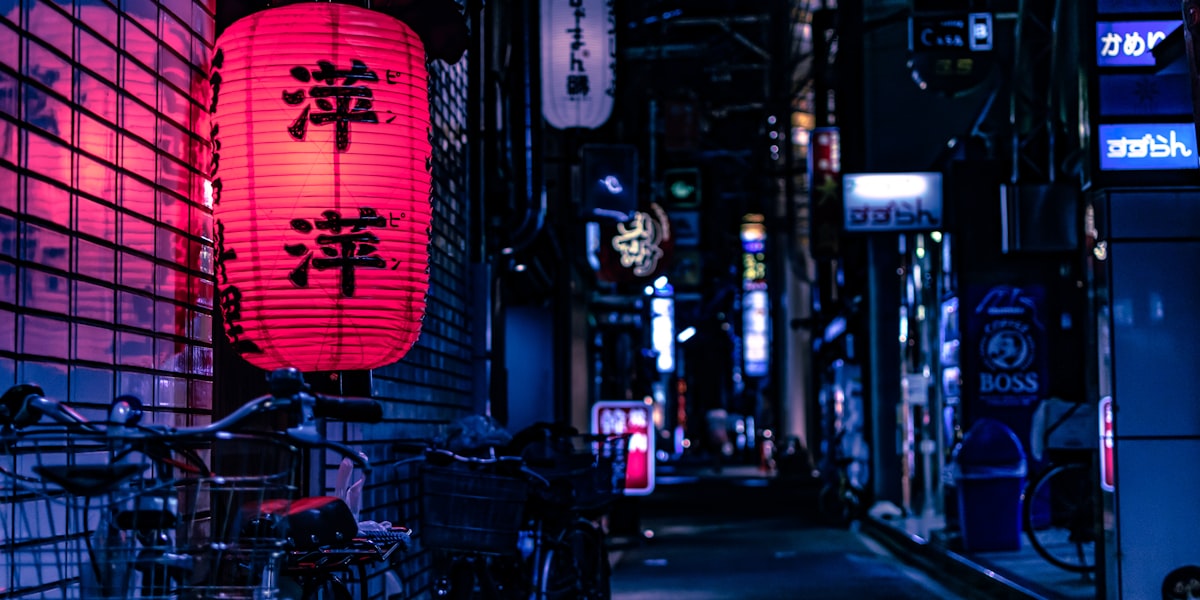
There is work that engages directly with Bangkok's contemporary visual culture: the specific colour palette of the city, the texture of its streets, the formal-informal collisions of a place where monks walk past luxury malls and street food is served beneath billboards for private equity firms.
And there is work that has no specifically Thai content whatsoever — that is simply very good fashion that happens to be being made in Bangkok, by people who live there and are thinking about the same things that the designers everyone already knows about are thinking about, but with different inputs and different conclusions.
The Manufacturing Advantage
One of the less-discussed reasons the Bangkok fashion scene is developing so quickly is structural: Thai garment manufacturing is extraordinary.
Thailand has been a major garment manufacturing centre for four decades, producing for European and American luxury brands at a quality level that is, in many categories, the best in the world. The factories that produce for international luxury houses are concentrated in and around Bangkok. The craftspeople who work in them — the pattern makers, the embroiderers, the textile specialists — live in the city.
Young designers in Bangkok have access to manufacturing relationships, technical expertise, and material suppliers that designers in comparable cities elsewhere cannot approach. A small Bangkok label can have its clothes produced to a standard that would cost a European designer ten times as much to achieve in their home market. The craft is here. The cost is here. The access is here.
This is not unique to fashion — it is the same logic that makes Bangkok an interesting place to build things in general, from technology startups to hospitality businesses to, now, clothes. But in fashion it has a particular force, because the gap between concept and execution is where most small labels die, and in Bangkok that gap is shorter than almost anywhere else.
The Retail Geography
The Bangkok fashion underground is not hard to find once you know the map. It is simply not yet on the international fashion media's map.
The Siam area — specifically the blocks around Siam Square — has for years hosted independent fashion retail that sits alongside the mainstream mall brands. The stores here are small, often visually unprepossessing, and full of clothes that repay attention. But the more interesting geography has shifted, in recent years, toward the older parts of the city.
Charoen Krung, the road that runs along the Chao Phraya River through what was Bangkok's first commercial district, has become a centre of creative industry in the broadest sense: galleries, studios, restaurants, and, increasingly, fashion. The building that once housed the East Asiatic Company is now a creative hub. The warehouses that stored rice and spices a century ago now store sample collections and fabric archives.
Nimman Road in Chiang Mai — technically a different city, but connected to Bangkok's fashion ecosystem by designer relationships and shared manufacturing — offers a northern complement: more craft-focused, more textile-driven, and producing work that is generating its own international attention.
Why The World Is Watching
The international buyers and editors who are beginning to make Bangkok a destination describe their experience there in consistent terms. The clothes are interesting. The designers are serious. The prices are, by international standards, entirely reasonable — a reflection of the manufacturing advantage and the as-yet-limited international markup.
But the most consistent observation is simpler than any of these practical considerations: Bangkok fashion looks like Bangkok. It has a specificity — a relationship to the place and culture from which it emerges — that the globally homogenised fashion of the luxury mainstream increasingly lacks.
In an era when everything available everywhere looks increasingly like everything available everywhere, clothes that could only have come from one place are not a niche proposition. They are exactly what fashion needs.