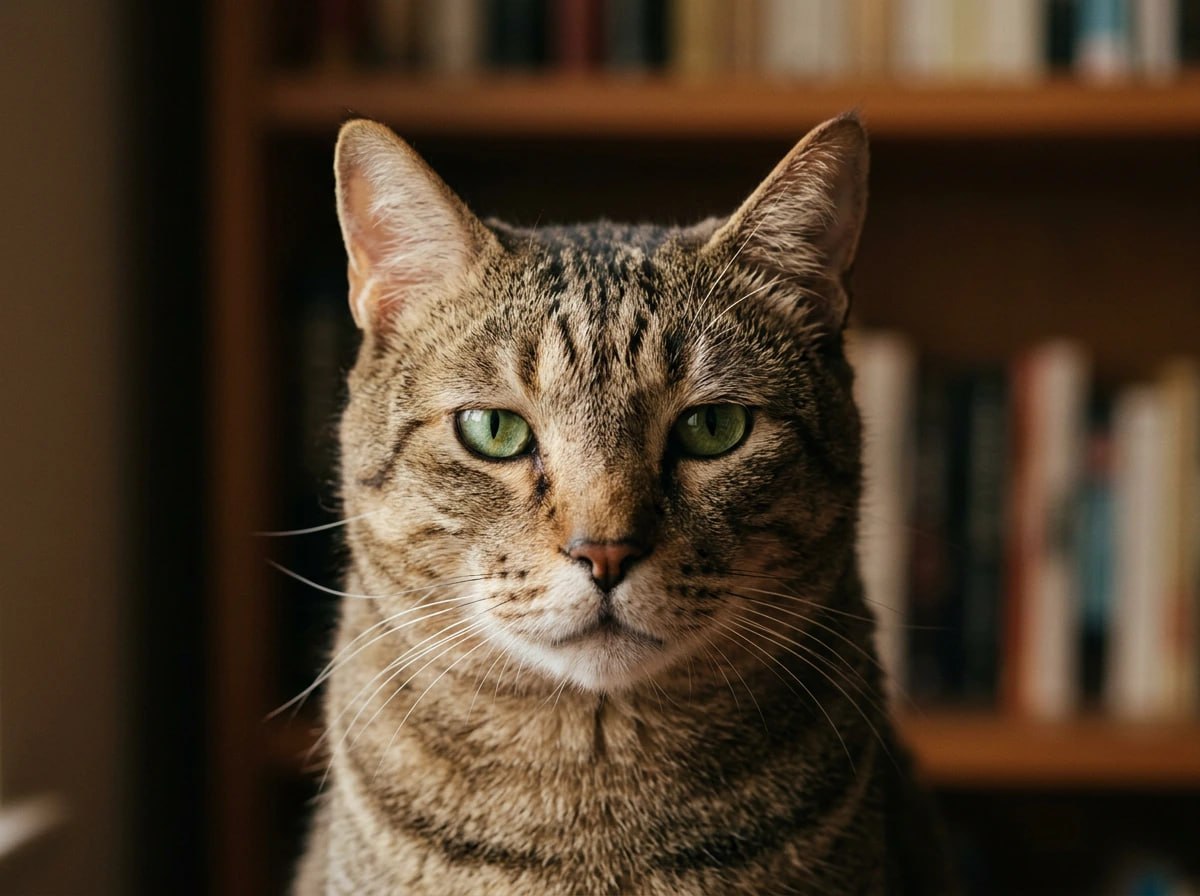
Somewhere between 2019 and 2026, a cat named Chang quietly accumulated more followers than most countries have citizens. He didn't audition for the role. He didn't have a five-year plan or a brand strategist (well, not initially). He simply existed, on camera, occasionally looking directly into the lens with the expression of someone who has seen all of human civilization and found it moderately amusing. And then the internet decided he was a deity.
Today, Chang has 2.3 million followers on Instagram, 1.8 million on TikTok, a merchandise line, partnership deals with major pet food brands, and more passive income than his owner probably makes from actual work. But here's the thing nobody wants to admit out loud: millions of people are following Chang because he's free therapy. And he's better at it than actual therapists.
The Origin Story
Chang was not born famous. He was born a soi cat—a street cat—in Southeast Asia, living hand to mouth in the way that hundreds of thousands of street cats do: scrounging for food, avoiding cars, surviving. He was rescued by his current owner, who discovered he was HIV-positive. Feline immunodeficiency virus. Incurable. A diagnosis that would have been a death sentence in most shelters, in most countries, for most street cats.
But Chang's owner kept him. Cared for him. Gave him a home, medication, dignity. Within a year, Chang had recovered his health. He was a rescue with a chronic illness, thriving.
The owner had a phone. The owner had Instagram. The owner had a cat who seemed actively interested in being photographed. Not because he was vain (though he definitely is), but because he was, in the most literal sense, a cat who had been given a second life and knew it.
The first photo was unremarkable: Chang sitting on a bed, mid-yawn, looking like he was simultaneously judging humanity and considering a nap. It got 47 likes. By photo #100, Chang had 50,000 followers. By photo #500, he had 500,000. The trajectory was so predictable it felt like a bug in Instagram's system. Except it wasn't a bug. It was data. It was people recognizing something in Chang they didn't have a name for.
The Psychology of Following a Cat Instead of Seeing a Therapist
Here's what nobody says directly, but everyone feels: in 2024-2026, the cost of therapy has become prohibitive. A single therapy session costs $150-$300. A year of weekly therapy costs $8,000-$15,000. Many people don't have insurance that covers mental health. Many have exhausted their annual therapy allotment. Many are simply tired of the industrial complex of mental health, where you pay money to talk to a stranger about your problems, and the stranger takes notes and occasionally nods.
So what do they do instead? They follow Chang.
Every morning at roughly the same time, a new photo appears. Sometimes it's Chang looking out a window. Sometimes it's Chang judging the camera. Sometimes it's Chang sleeping. Sometimes it's Chang looking like he's contemplating the futility of existence while sitting in a cardboard box.
And something about watching a cat exist—really exist, with no performance, no productivity, no attempt to be anything other than a cat—provides something that therapy doesn't: permission.
Permission to do nothing. Permission to be sad. Permission to stare at something without purpose. Permission to exist in a state of mild discontent without needing to "process" it or "work through it" or have some kind of emotional breakthrough about it.
A therapist will ask: "How does that make you feel?" Chang will not ask. Chang will simply sit. And by sitting, he will communicate something more valuable than any insight a therapist could offer: it's okay to sit. It's okay to not have answers. It's okay to not be okay, and to not need to fix it immediately.
What makes Chang's message even more powerful is this: he's a rescued street cat who is HIV-positive. He was supposed to die. He was supposed to be euthanized in a shelter somewhere. Instead, he's alive, healthy, thriving, and now the companion of millions. He's living proof that recovery is possible, that being broken doesn't mean the end, that a chronic condition doesn't define your entire existence. He doesn't know this about himself—he's just a cat, existing. But people know it. They see a cat with HIV living better than they are, and something in them shifts.
The internet has understood this intuitively. The comments on Chang's posts are not about Chang. They're about the person commenting:
- "mood"
- "i felt this"
- "i am this cat"
- "Chang understands the futility of existence"
- "finally, something real"
- "my therapist costs $250/hour, Chang costs nothing"
That last comment appears repeatedly. Because people have done the math. They've realized that following Chang is free. It's available 24 hours a day. It doesn't require appointment-setting or insurance paperwork or sitting in a waiting room. It's just: open Instagram, scroll to Chang, sit with the feeling of seeing a cat exist.
The Economics of Emotional Labor
Here's where it gets weird: Chang has become a mental health provider, a confidant, a therapist—and he's neither consenting to this role nor receiving compensation for it. He's generating approximately $150,000-$200,000 per year in revenue. His owner receives a percentage of this. But Chang himself receives: food, shelter, and the infinite indignity of being photographed constantly.
Traditional Therapy: Cost to patient: $200/hour. Therapist receives: $100-150/hour. Patient gets: someone listening, some insight, maybe a coping strategy.
Chang the Cat: Cost to follower: $0. Chang receives: cat food (~$2K/year). Follower gets: permission to exist, 6+ hours of existential comfort, knowledge that someone else (a cat) is also just sitting around doing nothing.
The ROI on following Chang is technically infinite. You're paying nothing and receiving something that costs money in traditional therapy. Millions of people are receiving mental health support from a cat, in the form of existence. And the owner is making money off this arrangement.
The Monetization
By 2022, Chang had reached a threshold where Instagram suggested he start a business account. Brand deals followed. Pet food companies offered $50,000 for a single post. Merchandise companies approached: let us make plushies and t-shirts with Chang's face. The owner gets 10-20% of revenue. Today, merch generates approximately $50,000 per month.
A 6-second TikTok video of Chang knocking a pen off a table got 3 million views in three days. Sponsorships became a bidding war. By 2024, brands were offering $5,000-$15,000 per sponsored post. A post that takes 15 seconds to create can generate $10,000 in revenue.
The owner now makes approximately $150,000-$200,000 per year from Chang. This is more than the GDP of some nations. It's all generated by a cat who doesn't understand that money exists.
The Paradox
Chang is valuable because he's free. His content costs nothing. His existence costs nothing. Following him is pure access without friction. But the ecosystem around him is entirely monetized. You can follow him for free. You can receive the therapeutic benefit for free. But if you want to wear his face, if you want to sleep on a pillow with his image, if you want to be part of his community in a tangible way, you have to pay.
The owner has created a business model around emotional attachment. You attach to the cat for free. Then you buy merchandise to feel closer to the cat. Then you follow him on multiple platforms. Then you turn other people on to Chang. Then they buy merchandise. And the cycle continues.
What This Means
Chang is proof that we've collectively abandoned hope in human-provided meaning. We don't want to watch someone's carefully curated life. We want to watch a cat be a cat. We want permission to do nothing. We want to look at something that doesn't perform happiness, doesn't sell us anything explicitly, and doesn't pretend to have wisdom.
Millions of people would rather spend six hours a day watching a cat exist than spend $200/hour on therapy. They'd rather have free access to something that feels real than pay for something that feels like work.
Chang has built an empire by understanding something that therapy hasn't: people don't want to be fixed. They want to be understood. And a cat sitting on a couch understands them better than any human ever could, because he's not trying to fix them. He's just sitting. And sometimes, that's the most valuable thing of all.
The story gets deeper when you know who Chang is: a soi cat, rescued from the streets, living with an incurable disease, thriving anyway. He's not sitting on a couch because he has nothing to do. He's sitting on a couch because someone believed he was worth saving. And that act of rescue—that simple choice to give a street cat with HIV a home—has somehow become the most powerful mental health intervention millions of people have access to.
Chang didn't become an empire. He became proof that recovery is possible. That being broken doesn't mean the end. That a chronic condition doesn't define your worth or your capacity to help others heal.
Stats at a Glance: Followers: 2.3M Instagram + 1.8M TikTok. Annual Revenue: ~$150-200K. Cost of Food & Care: ~$2K/year. Cost of Traditional Therapy: $8,000-15,000/year. Cost of Following Chang: $0. Number of People Using Chang as Free Therapy: 4M+. Amount Chang Understands About This: 0%