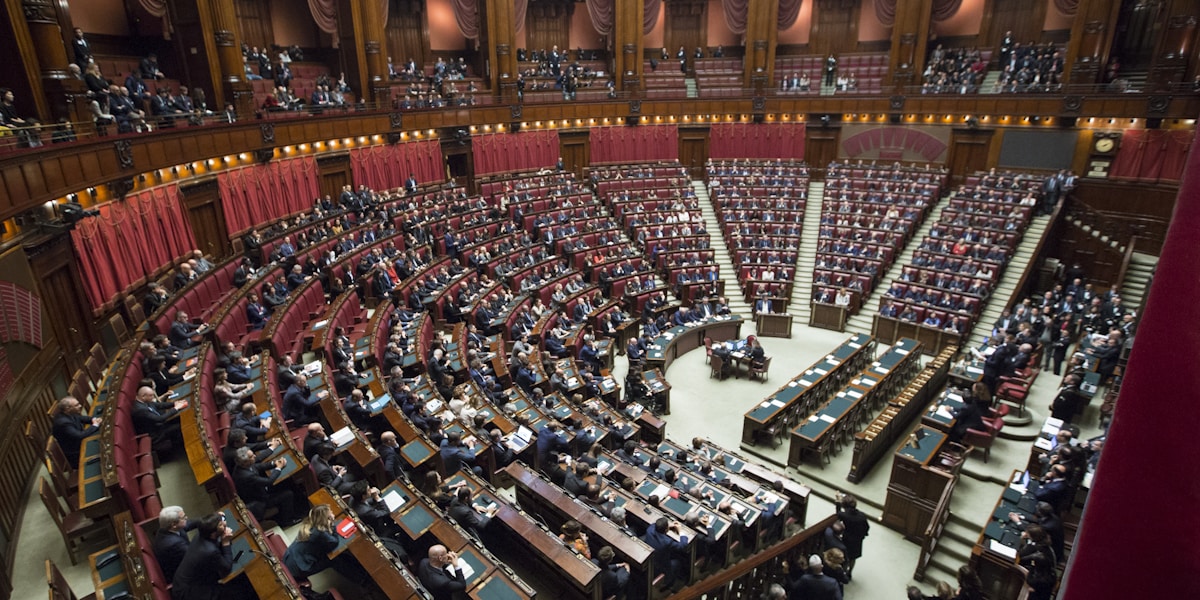
The Great Hall of the People is filling, as it does every March, with delegates in identical dark suits whose primary function is to applaud the decisions that have already been made. The cameras are there. The choreography is precise. The language of the speeches is the language of a system that has been optimising for internal coherence for so long that it communicates nothing to anyone outside it — and does not need to.
This is China's Two Sessions: the concurrent meetings of the National People's Congress and the Chinese People's Political Consultative Conference, which together constitute the formal display of Chinese governance. They are simultaneously the most watched and the least understood political event of the year in the world's second-largest economy.
What is being decided here — or rather, what is being formalised here, since the decisions themselves were made elsewhere, earlier, in rooms to which no delegation was admitted — will shape the Chinese economy, Chinese foreign policy, and the global order for the next five years. That makes understanding it important, even if understanding it is genuinely difficult.
The Numbers That Matter
The headline from this year's Two Sessions, which will be widely reported, is the GDP growth target. China will announce a target of approximately five percent, as it has for several consecutive years. This number will be debated by economists who will point out that Chinese GDP statistics are not directly comparable to those of market economies, that the composition of growth matters more than its headline rate, and that five percent growth in an economy of China's size represents an enormous absolute addition to global output regardless of methodological disputes.
The numbers that matter more, and will receive less international coverage, are in the sections of the Government Work Report dealing with technology investment, military modernisation, and what the document calls the 'development of new productive forces' — the economic transformation agenda that Xi Jinping has been advancing since 2023.
The Technology War, Continued
The technology competition between China and the United States is the structuring conflict of the current era, and the Two Sessions will advance it in ways that are less dramatic than military confrontation and more consequential.
China's semiconductor ambitions — the drive to achieve meaningful independence from US-controlled chip supply chains — will receive another tranche of state investment at this session. The numbers are large: estimates suggest the state technology investment programme will reach two trillion yuan over the next five years. The results, given the state of Chinese semiconductor manufacturing in 2023, are genuinely uncertain. But the scale of commitment suggests that China is treating the technology competition as existential, which in the long run is the most important factor in who wins it.
AI investment, already substantial, will expand further. The Chinese model — state-directed, data-rich, less constrained by privacy regulation than Western equivalents — has produced AI capability that is closer to the American frontier than Western policymakers were willing to acknowledge two years ago and are now being forced to acknowledge.
The Military Signal
The military budget announcement at the Two Sessions is always watched. China will announce an increase — the exact figure is typically around seven to eight percent — that will be read in Washington, Tokyo, and Taipei as a data point in the ongoing assessment of Chinese military trajectory.
The number itself is less informative than the context. China's military modernisation, underway for two decades, is approaching a threshold of capability that changes the calculus of conflict in the Western Pacific. The People's Liberation Army Navy is now the largest navy in the world by number of vessels. Its quality gap with the US Navy has narrowed substantially. The window during which the United States could intervene militarily in a Taiwan scenario with high confidence of success is, by most serious assessments, closing.
The Succession Spectre
Hanging over the Two Sessions, unacknowledged in any official document, is the question of succession. Xi Jinping has removed the term limits that would have required him to step down, and there is no credible public evidence of a designated successor. In a system where the orderly transfer of power has historically been the most destabilising moment, the absence of a succession plan is a risk that the system has chosen to carry rather than address.
The delegates in the Great Hall are not discussing this. The journalists covering the Two Sessions are not permitted to ask about it. But it is present, as the thing that cannot be named often is — in the questions that the system's architecture does not have answers to, in the plans that assume continuity and cannot account for its absence.