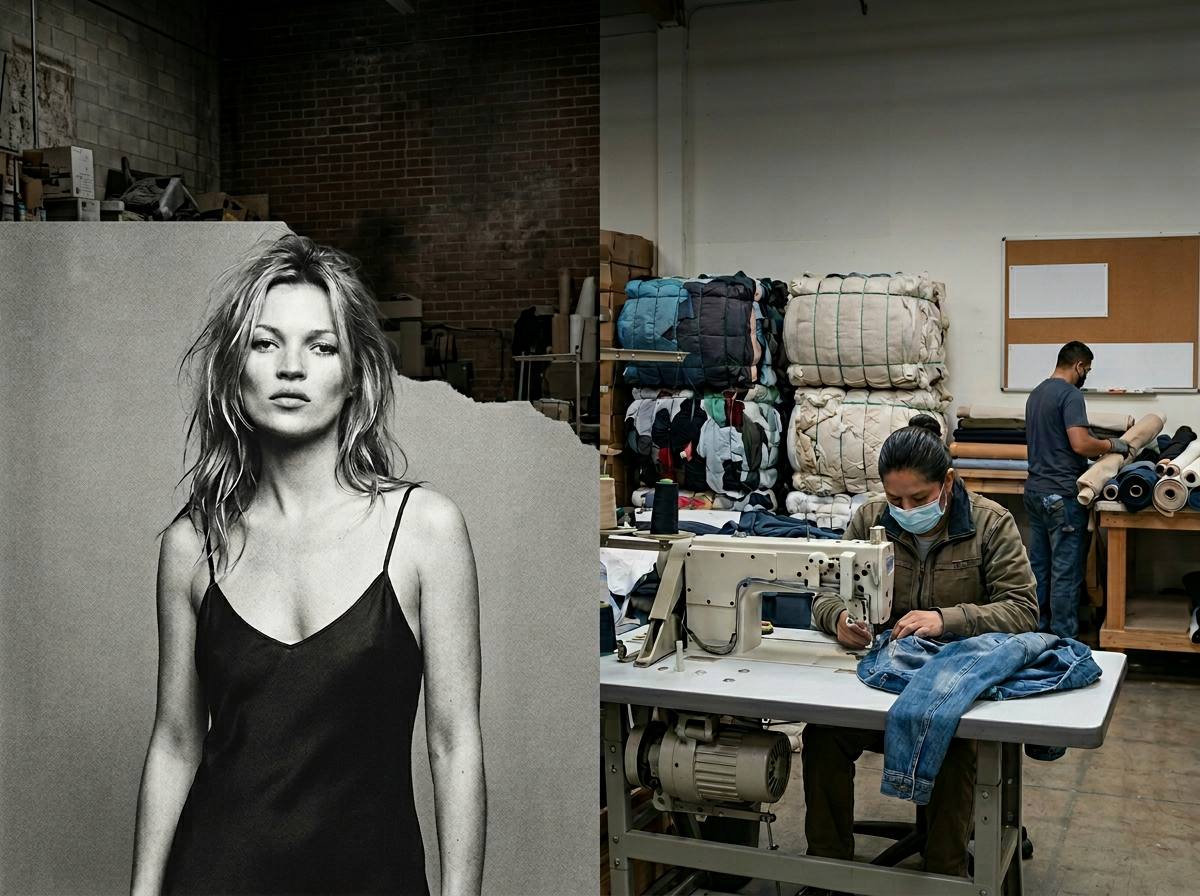
Every fashion brand claims to be sustainable now. Walk into a Zara store in 2026 and you'll find a Join Life collection—garments made from recycled polyester, with a QR code linking to sustainability commitments. Browse H&M's website and you'll see pages dedicated to their conscious choice products. Even luxury houses like Gucci and Balenciaga publish glossy sustainability reports with carbon reduction targets. And almost none of it means what you think it means. The fashion industry's relationship with sustainability has entered a phase I call theater. It is not that there is no genuine commitment to environmental responsibility—there is. But it is dwarfed by the scale of greenwashing, the gap between promise and practice, and the structural incentives that make real sustainability commercially unattractive. The result is a bifurcation happening in real time. At one end, a small number of brands are actually doing the hard work: transparent supply chains, genuine carbon accounting, dramatically lower production volume, higher prices, fiercely loyal customers willing to pay for the real thing. At the other end, fast fashion continues to accelerate, using sustainability language as cover while total output increases year-over-year. In the middle? The traditional fashion industry is being hollowed out. The Theater: How Brands Claim Sustainability Without Achieving It Recycled Materials as Greenwashing. A brand sources recycled polyester—plastic bottles collected from developing countries, shredded, re-spun into fiber. They market this as a sustainability victory: Made from recycled ocean plastic! Technically true. The environmental impact is far less impressive. Recycled polyester still requires dyeing, processing, chemical treatment. The energy cost is not trivial. The garment is still polyester—it will shed microplastics when washed, persist in landfills for decades. The brand has shifted the burden from petroleum extraction to plastic collection and processing, which is meaningful but not transformational. More importantly, the brand maintains production volumes that grew 15% year-over-year while claiming sustainability credentials. Carbon Neutral Claims With Invisible Asterisks. A European brand claims carbon neutrality. They publish detailed carbon accounting—scope 1 (direct operations), scope 2 (energy), scope 3 (supply chain, transportation). But the carbon neutral claim usually applies only to scopes 1 and 2. Scope 3—manufacturing, raw materials, shipping—is offset through carbon credits, often from renewable projects in developing countries. The problem: they cost almost nothing. A fashion brand can offset tens of thousands of tons of CO2 for a few million dollars. The carbon neutral claim is technically true while the actual supply chain remains unchanged. Ethical Manufacturing That Isn't. The buzzword is Fair Trade or ethical manufacturing. A brand sources from a certified factory in Vietnam, pays workers above the legal minimum, conducts regular audits. The legal minimum wage in Vietnam is $200-250 per month. Above minimum often means $300-400. A skilled garment worker can spend 10-12 hours daily earning in a month what a consumer pays for a single garment. The wages have not risen meaningfully in a decade. The brand markets the relationship as ethical. The economics remain extractive. Lower Production Claims With Higher Total Output. A brand announces they will reduce production by 20% in their main line, focusing on quality over quantity. What they don't mention: they've launched four new secondary lines, expanded accessories, increased overall output by 8%. The 20% reduction is real. The net reduction in environmental impact is not. The Real Thing: What Actual Sustainability Looks Like In the landscape of fashion greenwashing, a small number of brands committed to something genuinely different. Their approach is economically brutal and commercially ruthless. Patagonia manufactures less, charges more, is obsessively transparent about supply chain environmental impact and limitations. They repair garments for free. They resell used Patagonia items at retail. They deliberately constrain growth to manage environmental impact. Result: Patagonia charges $200 for a jacket competitors offer for $80. Consumers buy because they believe in the brand. Profit margins are healthy. Environmental impact is real. Allbirds engineered materials specifically for environmental impact: sugarcane-based foam, eucalyptus fiber. They tracked carbon footprint of each product and printed it on the box. They maintained lower production volumes. Result: Allbirds shoes cost $95-120, 2x Nike's equivalent. The company has loyal customers willing to pay for verified environmental responsibility. Some Scandinavian labels (Samsøe Samsøe, Filippa K) built business models around fewer items per season, higher-quality fabrics, longevity design, higher pricing. They market quality narrative more than sustainability, but economics align. What These Brands Have in Common: Dramatically lower production volume. They produce fewer garments because that is the only way to genuinely reduce environmental impact. Higher prices. They charge 2-3x what mainstream brands charge because real sustainability is expensive. Transparent supply chains. You can trace most garments back to specific facilities, workers, environmental impacts. Skepticism about claims. Real sustainability brands are often more critical of the industry than greenwashers. Fiercely loyal customers. People buy because they believe, not because of marketing. The Bifurcation: Why the Middle Is Collapsing Traditional fashion exists in the middle: not fast fashion (cheaper, faster), not genuine sustainability (requires lower volumes, higher costs). Heritage brands—Hugo Boss, Tommy Hilfiger—are caught in the squeeze. They cannot match fast fashion's speed or price. They cannot claim Patagonia's credentials because supply chains aren't transparent and volumes remain high. Their solution: introduce a sustainable line, invest in marketing, hope premium perception translates to premium pricing. It rarely works. Profit margins compress. Market share declines. The outcome: brands move down-market (becoming more like fast fashion) or move up-market (becoming like Patagonia). The middle gets hollowed out. The Regulatory Acceleration The EU's Carbon Border Adjustment Mechanism (CBAM), implemented 2026, introduces carbon price on imports based on production carbon intensity. Fashion products manufactured in coal-powered countries face tariffs. This forces genuine accounting. A garment made in coal-powered Bangladesh now has measurable carbon cost attached to import into EU. Greenwashing becomes expensive because it requires maintaining fiction of low-carbon production while costs are rising. Similar regulation coming elsewhere. California exploring scope 3 emissions regulations. UK considering mandatory supply chain transparency. Regulation is turning sustainability from marketing advantage into compliance requirement. What This Means for Consumers If you buy fashion, you're increasingly choosing between three clear options. Fast Fashion (Zara, H&M, Uniqlo): Cheap, trendy, environmentally destructive. No pretense. A shirt costs $20, lasts a season, ends in landfill. This is the honest option. Genuine Sustainability (Patagonia, Allbirds, thoughtful Scandinavian brands): Expensive, durable, environmentally considered. A shirt costs $100+, lasts years, brand tells you exactly where and how it was made. Environmental impact is still real but orders of magnitude lower than fast fashion. Theater (traditional brands doing sustainability theater): Mid-priced, with unverifiable claims. A shirt costs $50-80, claims recycled materials, claims ethical production, you can't verify any of it. This is the most dangerous category because it lets you feel good about a choice that isn't materially different from fast fashion. The most environmentally responsible choice, paradoxically, might be to buy cheap fast fashion or commit to genuine sustainability—but not the theater option in the middle. The Next Phase Over the next 5 years, expect: Regulation to tighten. CBAM will expand. Supply chain transparency will become mandatory. Carbon accounting will become standardized. The middle market to contract. Brands that can't credibly claim low prices or genuine sustainability will lose market share. Genuine sustainability brands to become more expensive. As regulation increases compliance costs, prices will rise another 20-30%. Fast fashion to adapt. Some will invest in genuine carbon reduction. Others will retreat from regulated markets. Consumer awareness to split. Some will become skeptical of sustainability claims. Others will pay premium prices for verified sustainability. The gap will grow. The Hard Truth There is no version of fashion, as currently structured, that is truly sustainable at current production and consumption volumes. Patagonia and Allbirds are sustainable only because they produce less and charge more. If everyone bought from Patagonia, the environmental impact would be catastrophic. Real sustainability in fashion requires consuming less. Wearing clothes longer. Buying fewer items, better made. Repairing rather than replacing. The brands genuinely winning figured out how to make that business model profitable. They do it by charging prices that reflect the true environmental cost of production, and by finding customers who believe that's worth paying. Everyone else is operating in the theater. And the lights are starting to come on.