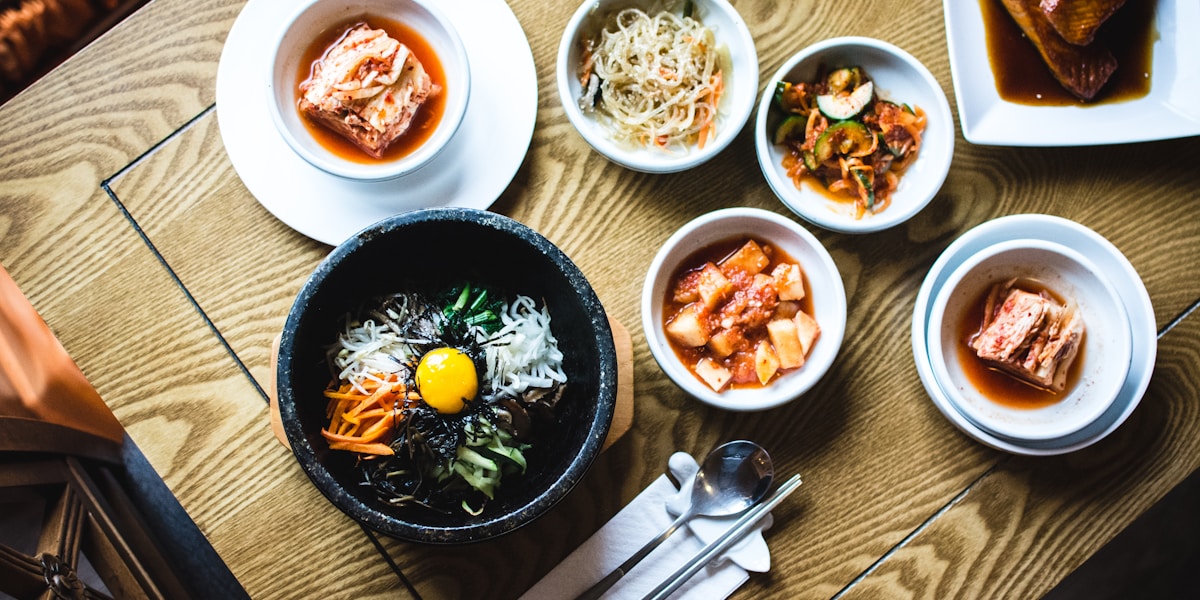
In a basement on the east side of Copenhagen, in conditions of precise temperature and deliberate darkness, forty-seven ceramic crocks are doing something that requires no electricity, no algorithm, and no intervention. They are fermenting. The crocks contain, between them, cabbage from three Danish farms, koji spores cultivated from a rice strain imported from Kyoto, brine prepared from seawater collected off the coast of Jutland, and a paste made from yellow peas grown thirty kilometres away.
This is Noma's fermentation laboratory. It is also, in miniature, a map of where the food world has been travelling for the last decade.
Fermentation is everywhere. It is in the restaurant menus of every serious city on the planet. It is on supermarket shelves in forms that did not exist five years ago. It is in home kitchens, in the form of sourdough starters and kefir grains and ginger bugs, tended by people who learned the technique during a lockdown and kept going because the results were, simply, better than anything they could buy. It is in the vocabulary of nutrition, where the gut microbiome has become the dominant explanatory framework for everything from mood to immunity to metabolic health.
Fermentation has been here, of course, for the entire history of human food. Every culture on earth developed fermentation independently, because preserving food before refrigeration was a matter of survival. Miso in Japan. Kimchi in Korea. Injera in Ethiopia. Kvass in Russia. Cheese and wine and beer throughout Europe. What is new is not the technique but the attention — the decision, by chefs and eaters and scientists simultaneously, to take something ancient and look at it with new eyes.
Why Now
The fermentation revival has multiple origins, and they converge in ways that feel less like trend and more like a cultural shift.
The first origin is scientific. Research into the gut microbiome, accelerating rapidly through the 2010s, established that the bacteria living in the human digestive system are not incidental to health but central to it. Fermented foods, by introducing and supporting diverse microbial populations, became interesting to medicine in ways they had never been before. The connection between fermented food, gut bacteria, and human health moved from folk wisdom to peer-reviewed literature, and from there into mainstream consciousness with unusual speed.
The second origin is culinary. René Redzepi's decision, at Noma, to make fermentation a primary creative tool rather than a supporting technique generated a generation of chefs who understood that the transformation of flavour through microbial action was as sophisticated a cooking method as any involving heat. The depth of flavour achievable through fermentation — the complexity, the umami, the acid balance — cannot be replicated by other means. Chefs who understood this built fermentation programmes into their kitchens. Their colleagues visited, tasted, and went home to build their own.
The third origin is environmental. Fermentation extends the life of ingredients and, in doing so, reduces waste. It transforms surplus — the overage of a harvest, the abundance of a season — into something valuable. In a food culture increasingly concerned with sustainability, a technique that produces extraordinary flavour while reducing waste is exactly the kind of idea whose time has arrived.
What It Tastes Like
The question that matters, in the end, is always the same: does it taste good?
The answer, in the hands of people who understand what they are doing, is consistently and sometimes astonishingly yes. Fermentation produces flavours that have no equivalent in the unfermented world. The specific savouriness of a long-aged miso — the way it coats the palate and persists — cannot be approximated by any additive or shortcut. The particular brightness of a well-made kimchi, the way acid and heat and funk resolve into something coherent and compelling, is a product of time and microbial activity that cannot be rushed.
These are not acquired tastes in the patronising sense — the flavours you have to work to appreciate. They are acquired in the literal sense: they are produced by a process that takes time, and they deliver depth of flavour that faster processes cannot achieve.
At Home
The domestic fermentation movement — people making their own sourdough, their own kimchi, their own kombucha — is one of the most significant food behaviour shifts of the last five years.
Pandemic lockdowns accelerated it by providing time and motivation simultaneously. But it has persisted because the results justify the effort. A sourdough loaf made from a mature starter, baked in a home oven by someone who has made the same loaf forty times and learned its particular rhythm, is a fundamentally better object than most bread available commercially.
This is not nostalgia. It is quality. And quality, reliably, is the thing that makes food practices persist.