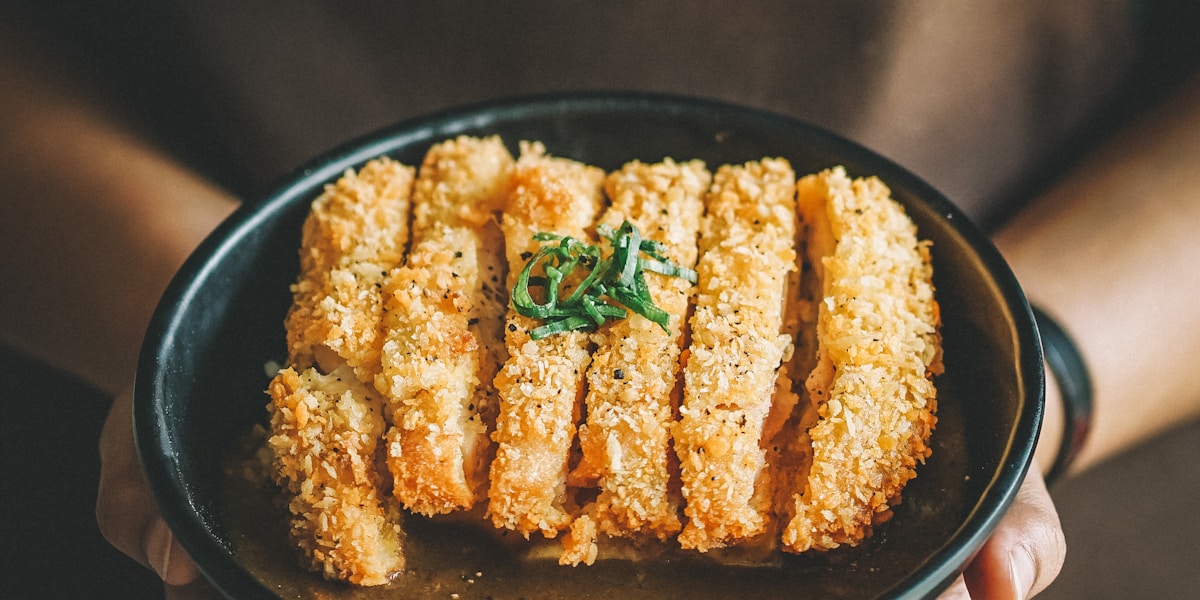
In the market town of Nakhon Phanom, on the Mekong River in the far northeast of Thailand, a woman is assembling a dish that has no name in any language except her own. She works from memory, from the accumulated knowledge of a technique that her mother taught her and her mother's mother taught her mother, adjusting by smell and texture and the particular light of the morning. The dish is made from fermented fish paste, fresh herbs pulled from a garden behind the market, and a chilli variety that does not grow anywhere except this stretch of the river. It will be eaten by the time the market closes. There is no restaurant in Bangkok that serves it. There is no tourist brochure that mentions it.
This is what Thai food actually is.
The version of Thai cuisine that the world knows — pad thai, green curry, tom yum, massaman — is a curated selection, historically shaped by what translated to foreign palates, what could be standardised for restaurant service, and what the Thai tourism industry decided to promote. It is not false, exactly. These dishes are genuinely Thai and genuinely delicious. But they represent perhaps ten percent of a food culture of extraordinary diversity — a diversity that is geographical, ethnic, ecological, and historical, and that most visitors to Thailand never encounter.
The North: A Different Country
Chiang Mai food is not Bangkok food. This is understood by anyone who has spent time in both cities, but its implications are rarely followed to their conclusion.
Northern Thai cuisine — khan toke, khao soi, sai oua, nam prik noom — developed in relative isolation from the central plains. The north was a separate kingdom, the Lanna Kingdom, until the late nineteenth century, and its food reflects a distinct cultural inheritance. The flavours are earthier, less sweet, more herbal. The heat is different — less aggressive, more complex. The fermented and dried ingredients that define northern larb and northern sausage are different from their central and northeastern equivalents.
Khao soi — the curry noodle soup of Chiang Mai — has become the best-known northern dish internationally, its coconut-braised richness and crispy noodle topping photogenic enough to have travelled. But khao soi represents northern cuisine the way a single track represents an album. The depth of what surrounds it — the naem som, the kaeng hang le, the full range of nam prik pastes that differ by province and season — remains largely unknown outside the region.
The Northeast: Isaan and Its Influence
Isaan food is arguably the most influential regional cuisine in Thailand and the least understood outside it.
The northeast region — poor, predominantly agricultural, with strong Lao and Khmer cultural influences — produced a food culture built on extreme frugality and extraordinary flavour intensity. Fermented fish (pla ra) is the foundational seasoning of Isaan cooking: pungent, funky, irreplaceable in the dishes it defines. Som tum made with pla ra is a different dish from som tum made without it — not better or worse by some objective measure, but deeper, stranger, more insistently itself.
Som tum is, in fact, the most eaten dish in Thailand by volume. Not pad thai. Not green curry. Shredded green papaya salad, pounded to order in a clay mortar, adjusted to the customer's specification for heat and fish sauce and palm sugar, served with sticky rice and grilled chicken from a street stall. It is the quotidian food of millions of Thais, and the version served in most international Thai restaurants is a sanitised translation.
The South: Fire and Complexity
Southern Thai food is the hottest food in a country not known for restraint with chilli. It is also among the most complex.
The south's proximity to Malaysia and Indonesia, its predominantly Muslim population in the far south, and its access to different ingredients — fresh turmeric root, different varieties of chilli and kaffir lime — produced a cuisine distinct from anything else in Thailand. Khua kling, the dry curry of the south, is built on a paste so concentrated and a heat so direct that it demands full attention. Gaeng tai pla, made with fermented fish innards, is an acquired taste that rewards acquisition.
The southern style has no mainstream international profile. It is, in some ways, too uncompromising to have travelled — too hot, too funky, too specific in its demands on the palate. These are exactly the qualities that make it extraordinary.
Why It Matters
The diversity of Thai regional cuisine is not an academic subject. It is a living, evolving practice — one that is under real pressure from standardisation, from the dominance of Bangkok food culture, from the economic pressures that drive regional cooks toward the dishes that sell rather than the dishes that are most interesting.
Some of what exists in the markets of Nakhon Phanom and Nakhon Si Thammarat and Mae Hong Son today will not exist in a generation. The particular fermented preparations, the specific chilli varieties, the dishes that depend on ingredients found only in one stretch of river or one mountain range — these are fragile in the way that all hyperlocal knowledge is fragile.
The best reason to seek out regional Thai food, beyond the quality of the experience itself, is that seeking it out is a form of support for its continuation.