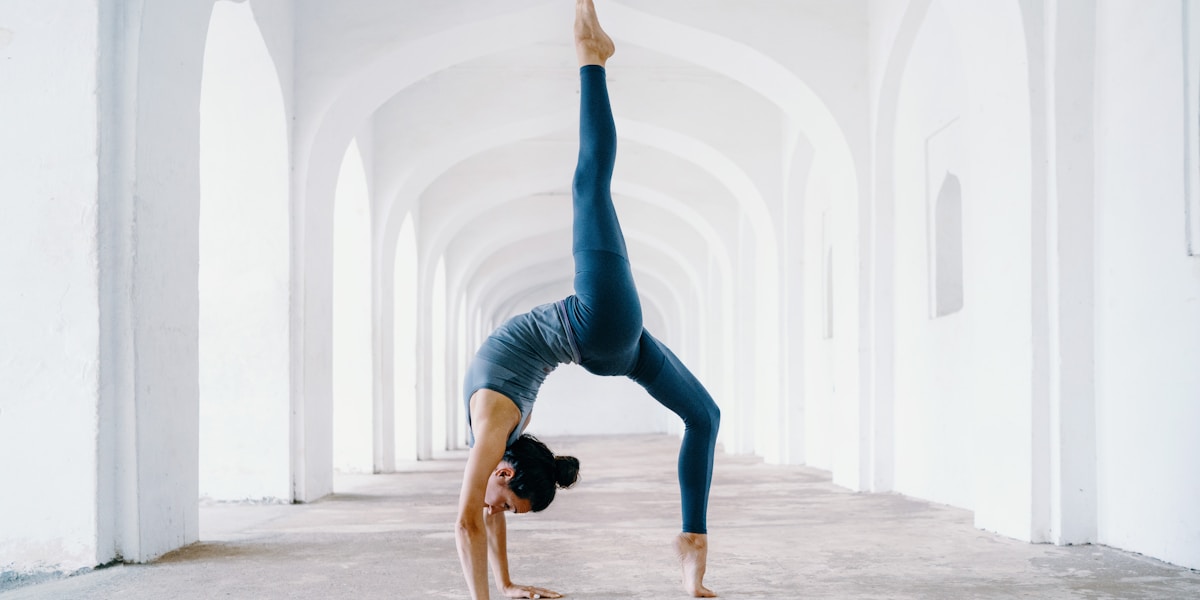
For a decade, yoga was one of the most photographed activities on earth. The poses on the cliff edge at sunrise. The perfect alignment captured from behind. The mat that cost two hundred dollars, the leggings that cost a hundred and fifty, the water bottle with the intention word printed on it. The algorithm rewarded it all. The industry built around it — supplements, retreats, apparel, apps — reached a valuation of eighty billion dollars globally.
And then something shifted.
The shift is not dramatic enough to qualify as a collapse. The studios are still open. The mats are still selling. But something in the cultural temperature around yoga has changed — a quiet withdrawal of a particular kind of attention, and with it, a gradual return to something older and less photogenic and considerably more interesting.
What the Bubble Was
The wellness bubble around yoga was not a fraud, exactly. The practice is genuinely beneficial — the evidence base for yoga's effects on stress, flexibility, pain management, and mental health is substantial and growing. The problem was not what yoga was but what it was made to mean.
In its Instagram phase, yoga became primarily a performance of a particular identity: disciplined, spiritual, premium, aspirational. The practice was inseparable from its aesthetics. You did yoga in a certain way, wore certain things, spoke about it in certain language. The language was borrowed from a genuine tradition but had been processed into a vocabulary of aspiration that bore little relationship to the actual experience of sitting with discomfort on a mat for an hour.
The teachers who built large followings in this period were not necessarily teaching well. They were performing wellness compellingly. The camera rewarded the handstand, not the breath. It rewarded the sunset backdrop, not the internal attention. It rewarded the caption about transformation, not the transformation itself.
What's Coming Through
The yoga that is emerging from the other side of the bubble is quieter, less visually spectacular, and more serious about what the practice is actually for.
Ashtanga, the physically demanding and highly structured system developed by K. Pattabhi Jois in Mysore, is experiencing a renewal of interest among practitioners who want rigour rather than aesthetics. The system is not designed for modification or personalisation. It is demanding, repetitive, and in certain phases genuinely difficult. It rewards consistent practice over years rather than spectacular progress over months. It photographs poorly.
Yin yoga — long holds, passive stretching, stillness — is growing in a cultural moment that has become suspicious of performance. You cannot look impressive doing yin. You can only be present with what you are feeling, which is often uncomfortable, which is often the point.
The resurgence of interest in the Yoga Sutras of Patanjali — the foundational text of classical yoga, which is not primarily about posture at all but about the nature of the mind and the mechanisms of suffering — reflects a hunger for the philosophical substance that the wellness bubble largely discarded.
The Teacher Shift
The teachers gaining students in the current moment are not, for the most part, the ones with the largest Instagram followings. They are the ones with the deepest knowledge — teachers who have studied for decades, who can speak with authority about the tradition from which the practice emerged, who are less interested in their students' Instagram feeds than in their nervous systems.
This is a meaningful shift in where authority in yoga resides. For a decade, authority was algorithmically conferred — the teacher with the most followers was the teacher most people encountered first. The teachers now drawing serious practitioners are often invisible on social media, known by reputation within the practice community rather than by follower count.
What the Practice Is For
The most honest answer to this question is the oldest one: yoga is a technology for working with the mind. The postures are a vehicle, not the destination. The destination — if the classical tradition is taken seriously — is something like the ability to observe the contents of one's own consciousness without being entirely controlled by them.
This is not a marketable proposition. It does not photograph well. It cannot be sold in a leggings collection or a retreat package or a wellness app subscription. But it is what the practice, at its best, actually offers. And after a decade of being sold everything else, a significant number of practitioners are finding their way back to it.